Monday, August 28, 2017

No veo la opción de Compartir Internet en mi iPhone 7

Si sos un usuario de Movistar en Argentina.
Tenés un iPhone 7.
No ves la opción de "Compartir Internet".
Y cuándo pedís ayuda a cualquiera de los canales de Movistar te responden esto...
"Tenés el manual del celu? Podés chequearlo ahí. Otra opción es que realices un reseteo de fábrica. Si no te aparece la opción de esa forma es necesario que te acerques a un servicio técnico externo ya que como nosotros no comercializamos esa marca no contamos con otras opciones para brindarte"

... qué es lo mismo que nada

Esto es lo que podés hacer:

Asegurate de que tenés buena recepción.
1. Apagá la Wi-Fi
2. Pasate a 3G
3. Entrá en Ajustes/Settings -> Red Celular/Cellular -> Opciones de Datos/Cellular Data Options -> Red De Datos Cellular/Cellular Data Network -> Compartir Internet/Personal Hotspot (No estoy muy seguro de las traducciones en castellano de las opciones.)
Completá el campo APN con: internet.movistar.com.ar
Dejá el usuario y la password en blanco.


4. Apagá y prendé el iPhone y listo.
5. Deberías ver la opción.


6. Volvé a LTE.

Si no funciona, deberías resetear la configuración de red y repetir los pasos 1 al 6.


Este post es para gente que no necesita el paso a paso y conoce el iPhone. Y fue escrito usando mi conexión de Internet de Movistar en mi compu 💪🏼

Disfruten y déjen su comentarios abajo.

Thursday, February 25, 2016

How an IBM Redbooks publication is born?


A white board with an "I AGREE" phrase followed by several signatures and a pile of post-its stuck in the back that just a couple of days ago where all over that board. Today their job is done and now they stand there as a proof and a promise that will end up on a brand new IBM Redbooks publication.

When a ITSO Residency starts a new group of residents coming from all over the world get together with on thing in common, passion for what they do.

After a few days ideas go from one place to the other, from one brain to the other, and if one is fast enough all of them can be cached and post-it to the board. Structure is added and it becomes the TOC, or table of contents, of a new book.

Then each team member stands in front of this board and leaves their signature, this simple act creates a strong connection between the passion, the ideas and those post-its, that reflects what each one of them and the team as a whole expects and will do for a brand new IBM Redbooks publication.

Monday, January 25, 2016

La Suegra

Cada tanto nos pasa que nos encontramos con publicaciones de nuestros amigos de las redes sociales en las que despotrican contra el universo de Facebook e Instagram al sentirse cuestionados en sus ideales y principios. Ideales y principios que incluyen desde cómo hacer las milanesas, criar a nuestros hijos o ser veganos.
Esta es mi reflexión acerca de la causa de estos exabruptos que nos llevan a aclararle al ciberespacio, quienes somos y de dónde venimos.
Antes de las redes sociales le rendíamos cuentas a nosotros mismos, nuestra pareja, y de acuerdo a la edad, a nuestros hija/o/s. Quién te producía estos malestares eran, como mucho, tu familia extendida que podríamos llamar en su colectivo "La Suegra." Compuesta por la suegra, claro, pero también tu suegro, tu cuñada/o/s, amigos de tu pareja y aunque en menor medida tu familia y amigos. "La Suegra" representa al colectivo de todo lo que tiene una crianza y principios diferentes a uno, son los de otro palo.
Hoy con las redes sociales "La Suegra" somos 2200 millones de personas que nos sentimos con el mismo de derecho de opinar. Y ese derecho crece cuánto más compartímos nuestras vidas en las redes sociales.
Así que la próxima vez que vayamos a nuestros muros a despotricar sobre nuestro derecho a ser quienes somos y a pensar cómo querramos, revisemos nuestra lista de amigos y nuestros últimas publicaciones en las redes sociales.

Saturday, January 2, 2016

Spiritual but not Religious

Every time someone inquires about my religion I feel uncomfortable because I know my answer will not be enough for who is asking. I can not respond: “I am atheist.” I can not respond: “I am agnostic”. I can not respond: “I was baptized as a catholic”. And I definitely do not like to be referred as a “none”. It’s easy to say I am tall, I am thin, I like pasta, I like travelling, and yes! although I am an Argentinean, I do not care about “fútbol”. These are all short sentences that describe without any doubt who I am and how I feel toward things. But I do not have one to convey what my beliefs are. Recently I came across the concept of being “Spiritual but not Religious” so here I dive into its meaning to see if it could be the answer to my prayers.

I am not atheist. Doing a quick search in Google you can find that an atheist is a person who disbelieves or lacks belief in the existence of God or gods. I don’t consider myself a person who disbelieves. In fact, I firmly believe that there is something else beyond what our five senses can show to us. I am always learning as much as I can about Christianity, Judaism, Buddhism and other creeds. When you strip them to their core they all speak about how to treat each other and agree on the existence of a superior being. This superior being is all that it is good in us and you can call it God, Universal Spirit or Energy. And by the way, believing in this also rules me out as agnostic, because agnostics only believe in what they can perceive with their five senses.

I am not religious. John Blake quotes Greeley, a professor at Sacred Heart University, in his CNN.com post “Religion demands that we accord to human existence some absolutes and eternal truths . . ." Absolutes and eternal truths simply don’t agree with me. Absolutes and eternal truths go hand in hand with fanaticism. And sadly, I don’t need to go far in human history to find many examples of what fanaticism can do in the hands of bad or ignorant people. Just take as an example what is happening in Syria or the recent terrorist attacks in Paris and San Bernardino. On the other hand, organized religion nurtures the needy and the poor. But as happens with any organization, when they are led by the wrong people or when their existence is threatened, they “inevitably [degenerate] into tussles over power, ego and money.”

I don’t like to be called a “none.” In one of its reports, the Pew Research Center’s Forum on Religion & Public Life defines nones as “. . . people who answer a survey question about their religion by saying they have no religion, no particular religion, no religious preference, or the like.” According to this research work, the term “. . . provides a negative definition, specifying what a phenomenon is not, rather than what it is . . . [and] implies that only those affiliated with a formal group are religious.” The Center avoids these misgivings by referring to this group as religiously unaffiliated. It emphasizes that “. . . the absence of a religious affiliation does not necessarily indicate an absence of religious beliefs or practices. On the contrary, as the report makes clear, most of the “nones” say they believe in God, and most describe themselves as religious, spiritual or both.

I am Spiritual but not Religious. The definition of spirituality as found in the first sentence of its Wikipedia’s entry reads “Spirituality may refer to almost any kind of meaningful activity, personal growth, or blissful experience.” John Blake quotes a Jesuit priest called James Martin arguing that “being Spiritual but not Religious can lead to complacency and self-centeredness. If it's just you and God in your room, and a religious community makes no demands on you, why help the poor?" I could not disagree more bluntly with his remarks. We tend to confuse self-centeredness with egomania. Even the most educated people make this mistake. Being self-centeredness is not a bad thing. It is actually a natural behavior. Self-centered people do everything in their power for their own well being and remain as the center of their own personal world. They procure to feel good by doing the things that better their world. This creates a virtuous cycle and allow them to be available for others. On the other hand, the egomaniac wants to be the center of other’s personal worlds. This creates a conflict situation for both where no one is complete. You would not say that Mahatma Gandhi and Mother Teresa were self-centered, but they were! Their great self-sacrifice and self-renunciation for their idea of God ultimately brought them joy. So you don’t need a religious community demanding you to do good because helping your community is helping yourself.

As you can imagine there is not only one definition of spirituality. The definition has evolved through the years but the etymology has remained. The Wikipedia entry on the etymology of the word spiritual explains that the term spirit means "animating or vital principle in man and animals." It is derived from the Old French espirit which comes from the Latin word spiritus (soul, courage, vigor, breath) and is related to spirare (to breathe).” In the context of Spiritual but not Religious, this etymology explains why I can not consider myself atheist or agnostic because I believe in something greater than the sum of the parts.

Having said all of the above I have to conclude that “Spiritual but not Religious” quite describes my approach to spirituality. I practice my beliefs independent of an organization. I am not affiliated and I do not forget that I am part of a community because balancing my existence with the existence of this community, and the whole world, is a part of my spiritual experience.

Thursday, December 17, 2015

Si pudimos con el tomate a 18 pesos

En Agosto de 2012 los Argentinos nos vimos obligados a valorar la moneda extranjera de otro modo. Y sin quererlo, también aprendimos a valorar la nuestra de otro modo. Para principios de 2013 algunos medios hablaban de hasta 15 tipos de cambios diferentes. Aparecieron el dólar Blue, Ahorro,
Turista, Bolsa, Liqui, Ladrillo y hasta el Celeste. Y con cada tipo de cambio apareció una manera distinta de valorar la moneda nacional. Una discusión distinta entre compradores y vendedores. Una ponderación más completa de todas las cuestiones que hacían al valor de una transacción.

Esta mañana mientras la Argentina vuelve hacia un mercado desregulado de las divisas muchos Argentinos no van a salir desesperados a buscar dólares. Muchos aprendimos que nosotros somos los responsables de las famosas corridas cambiarias. Entendimos que no vamos a pagar más por aquellos dólares que no necesitemos. Entendimos que si pudimos vivir sin ellos, y viajar sin ellos y hasta comprar "el iPhone" sin ellos, podremos seguir haciéndolo.

Quizás porque miro el vaso medio lleno, es que rescato el aprendizaje que nos dejaron las restricciones. Entendimos que valorar no es sobrevalorar. El precio del dólar está mucho más allá que en el numerito de una pizarra en el microcentro de la city porteña o en el valor que canta a viva voz un "arbolito."

El precio del dólar no es un designio divino, cómo no lo es el precio de la leche o el pan. Si un producto no tiene demanda y hay alguien que quiere venderlo, entonces el precio baja. El principio de la oferta y la demanda en su origen siempre ha sido justo. Por eso, si pudimos contra el tomate a 18 pesos, también podremos con un dólar más caro por que ahora sabemos valorarlo.

Wednesday, November 4, 2015

Viveza Criolla

Argentineans are known for what we call the viveza criolla. Viveza could be translated as cleverness. And criollo was used in the colonial times to describe a person who was a direct descendant from Spaniards born in Argentinean soil. So, viveza criolla is used to described the Argentinean way of being clever. The inventions of the floating ball pen and the fingertip identification system are said to be products of this attribute. As a child, I heard it in one of my mom’s pieces of everyday wisdom. When she’d see us heading towards the long corridor that connected our rooms at home, she’d give us pieces of our scattered stuff in the kitchen and say: “Save on trips. Take this with you.”

Viveza criolla came in handy when Pablo and I went on our first U.S. vacation together. I had been here for work several times so it was my turn to plan for the trip. We were going to visit San Francisco and then drive south through the west coast to Los Angeles. We even got lucky enough to get tickets for a Madonna concert in one of our three days in Los Angeles.

Since it was Pablo’s first time attending one of her shows we didn’t want to miss anything. One of the things I love about the U.S. is how everything seems to work like clockwork, and the whole trip had been great in that sense. Everyone here respected the rules, dates and times. So I figured that since we were staying close to the stadium leaving one hour in advance would be enough. We were not acquainted with the city so we let the GPS take us there. It was the time when GPSs didn’t know about traffic conditions so it took us via the shorter time path, which turned out to be the path everyone was taking.

The two lanes of the road heading to the stadium main entrance were jammed full of traffic. After 45 minutes we had only moved half a mile. As we were approaching an intersection, the viveza criolla in me kicked in and put this question in my mind, “Is it possible that this is the only road to the stadium?” I overrode the GPS directions, looked at the map and turned left at the intersection. A couple of blocks ahead we found a parallel road. We took it and it was empty to our surprise. No one was there. We drove all the way down that road until we were a block away from the stadium where we even found a free parking spot!

After the excitement of the concert I thought about how this tendency to follow the rules can keep American society from evolving when rules are followed blindly. We would have been late to the concert. In fact, many people continued arriving way after the opening act was over and Madonna was already on the stage.

There is no folly in following the rules. But strictly following the rules without applying common sense can be a problem. Failing to understand that rules are bounded by the time and situation of their creation is a mistake. Can you imagine African Americans still riding in the back of buses, or that after 14 years together Pablo and I would not have been able to marry?

I’d like to think that the U.S. court justices had a stroke of viveza criolla when they saw that this was a mistake and ruled in favor of marriage equality. For centuries American society was blindly following the same two-lane road that denied the diversity of relationships and the right to marry. They took the turn to find a faster road to social justice. They understood that they had to ensure diversity in the application of human rights. They knew it was their job to be always alert to change rules for the better, to validate them against common sense and the wisdom of the times. This is the essence of our viveza criolla and we Argentineans know that the secret ingredient is diversity.

Wednesday, October 21, 2015

Absent Adults

Langston Hughes’ Salvation and Floyd Dell’s We’re Poor essays have a main common theme about two boys coming of age, but there is a secondary and maybe not as easy-to-spot theme: the consequences of adults underestimating children.

Langston is a boy who believes in Jesus the way many kids believe in Santa Claus. He has listened to many grown ups telling stories about how Jesus saved them. His aunt starts speaking about a special meeting for children that is going to be held before her church’s revival ends “to bring the young lambs to the fold.” His aunt has even given him many examples of what he is going to experience when Jesus comes into his life: “you [see] a light, and something [happens] to you inside!” And he believes her because “old people . . . ought to know.”

Floyd is a happy boy who does not feel anything is missing from his perfect life. His parents are always home. He always has potato soup which is his favorite meal. And when the Sunday-school superintendent makes a speech about hard times and children not having enough to eat, he is able to help with an envelope with coins and a bag of potatoes. But everything changes when Christmas gets closer. His parents do not seem to want to talk about it. He starts thinking about the reasons for his parents ignoring the subject completely. And finally the anxiety of this situation makes him to confront them by asking “This is Christmas Eve, isn’t it?”

Langston goes to church on that special night and sits on the mourners’ bench with other children. When the preacher finishes his sermon the whole congregation starts calling the children to the altar to meet Jesus. Langston waits for Jesus to come and take him but nothing happens. None of the clues his aunt has told him to wait for show. And when he realizes that it’s getting late and every one is waiting for him, he stands up and runs to the altar to be saved. But he knows that he is doing this for all the wrong reasons. Later that night when alone in bed he thinks that Jesus has not come to help him. And he regrets having lied and deceived everybody. He even believes that there is no Jesus at all.

After Floyd asks his Christmas Eve question, his parents look away. His mother is noticeably distressed and leaves the room. His father puts on a joking face and explains he does not know if it is Christmas because he has not been reading the papers. He also leaves the room and Floyd, like Langston, goes to his room and is left alone with his thoughts. That is when he realizes that they are poor! This is the reason why his mother did not want him to put his name on the envelope. This is why the envelope only had pennies. And the reason why his father is always home is because his has no job. He also wrongly concludes that because he is now a poor boy he is not allowed to want anything or to have anything, not even hope.

It is not a coincidence that the turning point in these stories is when both boys are left alone to their own thoughts in the dark of their rooms. In Langston´s story his aunt fails in explaining what his journey into spirituality will be. And in telling him that she is trying to put into words what it was like for her. Letting Jesus come into his life is more of a private experience in which he is not supposed to actually see Jesus but understand that this very concept will help him to explain faith as an adult and share it with the church community. In Floyd´s story his parents underestimate the ability of the kid to perceive all the hints about their situation. It could be said that they do this to try to shield him from a painful situation, but not explaining what is actually going on has a worse effect.

Both kids arrive at conclusions of their own based on what they think it means to be saved by Jesus or what it means to be a poor kid. These two notions are perfectly natural for anyone entering adulthood but they are rendered more painful because the adults do not support them with the truth along the way. Entering adulthood should be a journey to share with other adults who should treat you like one. At home my mother was like this but my father was more like Floyd’s father. The only decision I was left alone with as a child was to choose what method I preferred. I chose my mother’s.

Wednesday, September 30, 2015

The Power of Images

I believe in the power of images that allow you to picture your own future and that spark wishes strong enough to shape your own reality. I remember as a child arriving in Buenos Aires to spend a few days during summer school break. It was a beautiful summer night and my father was driving the car to enter the city through Avenida Leandro N. Alem, where the emblematic IBM building has been located since 1983. I cannot say how old I was, but I was just tall enough to fit on my knees in the back of the car, with my arms on the back of the seat to look through the rear window. Every time we would visit a new city I would assume this position because I was able to watch the sky, count the street lights and stare at big tall buildings.

This was the setting for one of my earliest and most vivid memories. While we were slowly passing the IBM building I looked up and got caught by its impressive architecture. How was such a building even possible?! A few stories from its base the structure got thinner. It was as if a giant had squeezed that section of the building. How could all the floors above that section be supported by such a thin structure?! How could the elevators pass through it?! When my gaze reached the top sign everything made sense. Only a company like IBM could have its offices in such a building. And while I was looking at that image I thought to myself, “Someday, I will work here.” It was the power of that image that forged a big part of my life.

I was just a kid from Cinco Saltos, a small town of 15,000 in the Argentinean Patagonia. It was a farmer’s town and the only other industry besides growing apples, pears, peaches and grapes was a chemical company. This company was so important to the economy of Cinco Saltos that the only high school where chemical technicians were trained in the region was right in our town. All you could hope for was to get good grades and start working there as soon as you finished high school. When I got out of primary school I decided to go there even though it meant more mathematics, physics and chemistry, and one more year than in any of the other high schools. But I did it because I thought that a technical high school would better prepare me for a science and technology career.

By the end of high school, I had decided to pursue an engineering major, and in college, I specialized in Business Management Decision Support Systems. I discovered that I liked to communicate complex information technology concepts in simple ways so every organization could understand, implement and benefit from them. This mix of a nerd with communication skills turned out to be a highly sought after combination, so as a senior, I was offered an internship at IBM, where I started my professional career as an IT Specialist.

In the end, all my career choices aligned to make that image of myself working at IBM a reality. It was the power of that image that took me back to the same building that had impressed me as kid. Other images like this one have made lasting impressions along my life. For example, when I saw an human rights activist giving a speech that moved me, I knew that I wanted to be able to step on a stage to speak and inspire people. Or when I saw a successful business executive in a movie stepping in and out of planes to travel around the world, I knew that I wanted to have a job that would allowed me to travel like that.

This is why I believe in the power of images. Because images can inspire all your personal and professional accomplishments. Images can give you strength and hope when you have depleted your own. And ultimately images like these brought me to try and inspire you with the story of a kid who, impressed by the image of a curious building, turned a wish into a reality.

Monday, July 6, 2015

El pensamiento Facebook del día - La puteada futbolera

A veces veo posts que me incitan a comentar y me freno para no arrancar una polémica. Mi cabeza va para otro lado por la secuencia de pensamientos que me producen, y sin ese contexto pueden interpretarse como ataques personales. Decidí tomarlos por separado y compartir una reflexión con uds. en esta sección que he decido llamar: "El pensamiento Facebook del día."
Hoy: La puteada futbolera
Este fin de semana vi aparecer en mi newsfeed varios improperios debido al resultado de la final de la bendita Copa América. Por un lado me pregunto por qué no podemos expresar nuestra tristeza, frustración e ilusión rota sin recurrir oooootra vez a frases llenas de odio, prejuicio y discriminación contra todo un pueblo. Y por el otro me pregunto si los adultos que lo hacen son realmente conscientes de la repercusión de esa actitud en un niño. Esta vez tuve la oportunidad de vivirlo en primera persona. Fui testigo de cómo el mensaje peyorativo y discriminante de un adulto contra todo un pueblo se trasladaba directamente hasta las palabras de un niño que en otros términos imitó la actitud del adulto para expresar su frustración con el resultado de la final. Por eso otra vez les saco la roja a los grandes y repito que presten más atención a lo que hacen más que a lo que enseñan.


Esos ojitos están mirando y muy a su pesar ven lo que hacen con más atención que lo que enseñan.
Por suerte, también vi de los otros que apelaron a mensajes conciliadores, críticos y llenos de sorna y picardía, que cumplen con el mismo objetivo catártico que los primeros y nos enseñan que la puteada futbolera también puede ser inteligente.


Thursday, July 2, 2015

El pensamiento Facebook del día - Prejuicios y Apedorramiento

A veces veo posts que me incitan a comentar y me freno para no arrancar una polémica. Mi cabeza va para otro lado por la secuencia de pensamientos que me producen, y sin ese contexto pueden interpretarse como ataques personales. Decidí tomarlos por separado y compartir una reflexión con uds. en esta sección que he decido llamar: "El pensamiento Facebook del día."

Hoy vi dos.

1. Es increíble como usamos comentarios discriminatorios, homofóbicos, misóginos, recistas y demás sin medir el poder de nuestras palabras en un comentario o frase cotidianos que lo único que hace es sumar nuestro granito de odio diario. "Hacés comentarios de minita" Cuántas veces lo hemos escuchado y en cuánto escenario. Sin embargo no reparamos en lo peligroso y triste de su efecto. Son frases como estas las que contaminan a nuestros niños llenándolos de prejuicios, incapacitándolos de un juicio sano y una apertura a la diversidad que enriquece nuestras vidas. Y a nosotros, los adultos, nos muestra débiles de mente para mantenernos fuertes ante la repetición constante de estos pequeños y cotidianos crímenes de odio que un día terminan con un tiroteo en una escuela.


2. Cuando Vicente López y Planes, y Blas Parera compusieron nuestro himno lo hicieron pensando en que su letra y música debían resistir el paso del tiempo y convertirse en el medio por el cuál se transportaría parte de la historia de la esencia Argentina. Escuchar un "OOOOOO, oooooo, oooooo, ooo, O" de la hinchada Argentina no me produce emoción, me da bronca, porque cantar el himno ante extranjeros es la oportunidad de contar esa historia por la que debemos enorgullecernos y en cambio parecemos una horda despojada del lenguaje.


Sunday, April 12, 2015

Hassle free cloud: Four considerations when selecting your cloud provider

When choosing cloud providers, we usually pay attention to things like whether the provider has adopted open standards such as OpenStack, whether their cloud computing hybrid approach is dynamic, and whether they have integrated platform as a service (PaaS) and software as a service (SaaS) offerings.
What we often overlook is the importance of the aspects and features that these providers offer regarding maintenance, administration and troubleshooting. Here are four topics for consideration when you make this leap to the cloud.

Remote updating of layered applications

Once you have deployed a remote component from the cloud service, keeping it updated is critical for the efficient operation of the service. The ability to remotely update this component is something that you might not think of, until you have to keep up with hundreds of components spread across your environment. Don’t wait until it gets critical and causes you a lot of pain and effort to maintain.

Remote administration of layered applications

Have you ever needed to stop or start a task, but you find that you can’t? This is frustrating and makes you want to pull your hair out. The analogy that I use here is when I am watching television and my children have moved the remote. I want to change the channel but I have to get up to do this. It is not impossible to change the channel (or, for our purposes, to start an application) but it is more difficult than necessary. Having remote administration is like the TV remote; it allows you to easily stop or start the application without a lot of hassle.

Sending problem determination information

This may never happen to you, but I have had software fail on me. SHOCKER! And when that has happened, I’ve had to send problem determination (PD) information to the support team in order to resolve the issue.
When you’re first getting started, you might not be familiar with where the PD data is located on the system. Having the ability to collect this data and send it to the support team with one click would be amazing, especially since you might be frustrated that the application has encountered a problem. In fact, many would say this feature should be a core functionality.

Streamlining the onboarding process

So you have reached the moment where you begin climbing into the cloud, but nobody has given you a ladder. No one has told you how to prepare your team in order to stay there and avoid pitfalls.
We propose something simple but powerful, like an onboarding wizard. This tool would allow you gauge how ready you and your team are by inspecting your strategies in areas such as:
  • Change management
  • Backup and restore disaster recovery
  • Internet phasing aspect of your environment security
  • Capacity planning 
By following a simple checklist, the onboarding wizard would advise you before you take any chances, reducing the risk and making your ride into the cloud a smooth one.
We hope you find these four tips interesting and relevant to your IT shop and that they will help you to chose the best cloud service provider for your infrastructure as a service (IaaS) needs. We see a future where all IT organizations will implement some sort of cloud solution. Hybrid cloud plays a big role in that future, and you'll need to consider many different factors to adopt it widely and wisely.
What are some of your concerns about the future of cloud? Get involved by joining the conversation under the comments section and tweeting using the hashtag #HassleFreeCloud. Please also follow us on Twitter @swallacertp and @mRcSqZd for more hassle free cloud news.

Tuesday, January 6, 2015

Mi experiencia con un iPhone 6 y Claro Argentina

Ya han pasado un par de días desde que recibí mi último juguete electrónico y quería compartir contigo, amigo lector, la frustrante experiencia de ser el dueño de un iPhone 6 en la red de Claro Argentina.
Para hacerlo decidí capturar un par de pantallas de mi viejo iPhone 5 y compararlas con las de mi flamante iPhone 6.
Este post además de resultar una experiencia catártica es también un servicio a la comunidad para que si tienes los mismos problemas puedas usarlo como referencia cuándo te comuniques con alguno de los "especialistas" de atención al cliente.
Primero empecemos por determinar que ambos teléfonos tienen la misma versión de iOS y usé para las pruebas el mismo nano SIM con el mismo número de celular.

iPhone 5 - iOS 8.1.2
iPhone 6 - iOS 8.1.2

Configuración y registro en la red de Claro Argentina

El primer inconveniente es que cada vez que conecto el iPhone 6 a iTunes recibo el mensaje de que hay una actualización de la configuración de mi proveedor de telefonía celular. Acepto que haga esta actualización porque se trata de un procedimiento común cuando un teléfono desbloqueado de fábrica se conecta por primera vez a una nueva red de telefonía celular. En esta actualización baja un archivo que contiene entre otra cosas el acceso a la casilla de mensajes, la configuración de los mensajes de texto SMS/MMS y demás. iTunes confirma que la actualización se realizó con éxito pero cuando voy a la pantalla de información (About) de cada teléfono hay una diferencia que llama la atención. Ambos dispositivos tienen archivos de configuración con distinto nombre. En el iPhone 5 se llama "CLARO Argentina 18.0" y en el iPhone 6 "Carrier 18.0", esto constituye la primer diferencia y la evidencia de que algo raro sucede.
iPhone 5 - Carrier: CLARO Argentina 18.0
iPhone 5 - Carrier: Carrier 18.0

iMessage

Siguiendo con el paralelo iMessage, el Whatsapp de Apple, permite que uno se pueda comunicar con aquellos que conocen tu número de celular. Adicionalmente también se pueden usar dirección de correo electrónico asociadas a tu Apple ID, pero eso es otra historia. Para que ello ocurra el teléfono envía unos mensajes invisibles para activar el servicio y asociar tu número de celular para el envío y recepción. Esos mensajes no llegan y el servicio queda activado a medias impidiendo que todo aquel que conozca tu número de celular pueda comunicarse contigo usando iMessage. Probablemente esto se deba a que la mensajería SMS no está correctamente activada, ver punto anterior. Por otro lado Claro Argentina no intercepta estos mensajes que podríamos definir como "mensajes de sistema" y los cobra como mensajes internacionales fuera de mi plan.
iPhone 5 - Puedo (tilde) recibir y enviar iMessages desde mi número de celular
iPhone 6 - No puedo (sin tilde) recibir y no aparece como opción para enviar iMessages con mi número de celular

Facetime

Para Facetime ocurre lo mismo que con con iMessage, ver punto anterior. Aquellos usuarios de iPhone que quieren comunicarse contigo usando una videoconferencia pueden hacerlo a través de Facetime y sólo necesitan saber tu número de celular.
iPhone 5 - Puedo (tilde) recibir y enviar llamadas de Facetime desde mi número de celular
iPhone 6 - No puedo (sin tilde) recibir y no aparece como opción para iniciar llamadas de Facetime con mi número de celular

Visual Voicemail

Y por último, el Visual Voicemail tampoco funciona. Ésta es una de las funciones más interesantes de estos equipos y que permite escuchar los mensajes de voz a través de una interface gráfica en pantalla sin perder el tiempo escuchando un IVR que nos recita opciones numéricas para hacerlo. Las imagenes para este caso son autoexplicativas.
iPhone 5 - Visual Voicemail funcionando
iPhone 6 - Visual Voicemail con problemas
Debo reconocer que Claro Argentina me atendió perfectamente y luego de varias personas di con dos representantes que, por teléfono y por Twitter, confirmaron que el Visual Voicemail no funciona en los iPhone 6 y que no tienen un tiempo estimado de resolución porque el iPhone NO SE COMERCIALIZA EN LA ARGENTINA.
Cabe aclarar que NINGUNA OPERADORA ARGENTINA COMERCIALIZA el iPhone hay más de 500.000 iPhones en el país y esta situación la que permite que otros que no son los indicados, comercialicen estos equipos perjudicando a las operadoras y a los usuarios por igual.

Espero que este post les sea de utilidad y por favor compartan sus experiencias en los comentarios.

Thursday, June 19, 2014

Simplificar la Tecnología de la Información con el Procesamiento en la Nube

Cada vez que comienzo la conversación acerca del Procesamiento en la Nube o Cloud Computing hago hincapié en que esta conversación tiene poco de tecnología y mucho de negocio. Porque implica una transformación en la manera en la que hago la provisión del servicio de tecnología de la información (TI) a quienes lo consumen dentro de mi organización.
Pero para llevar adelante esta transformación debemos buscar un proveedor de procesamiento en la nube que cumpla con los siguientes requisitos y/o transformar nuestra infraestructura de TI para cumplir con éstos:
  • Simplificar TI - Crear un ambiente simple y poderoso para el desarrollo y soporte del procesamiento de aplicaciones.
  • Confiable - Contar con un conjunto robusto de APIs, una red confiable y una infraestructura de almacenamiento expansible. De manera tal que la infraestructura que soporta la nube resuelva automáticamente cuestiones comunes para que las aplicaciones sigan dando servicio, incluso en el caso de una falla.
  • Transparente - Hacer que la arquitectura base de servidores, redes, almacenamiento y demás componentes sea invisible, así los desarrolladores pueden hacer foco en sus objetivos. Ellos no deberían preocuparse por los servidores que usan, la topología de la red, dónde están los datos o cómo se almacenan. Lo que sea necesario debería estar allí, disponible.
  • De fácil expansión - Poder comenzar con una implementación muy pequeña y expandirla para satisfacer necesidades de negocio sin preocuparse por la adquisición de nuevos servidores, memoria o almacenamiento, o por negociar con los proveedores de energía y comunicaciones.
El objetivo final es la interacción de ambas infraestructuras que permita empezar con el procesamiento de una carga fuera de las propias instalaciones y luego moverlo con un simple drag-and-drop, alcanzando así el nirvana del procesamiento en la nube, la nube híbrida y dinámica.

Tuesday, April 8, 2014

Una Nube Dinámica, el camino a una empresa compuesta por bloques

¿Qué es una Nube Dinámica?

Una Nube Dinámica es la habilidad de consumir, interconectar y orquestar dinámicamente todos los tipos de nubes y TI para innovar rápidamente y adaptarse a los cambios en las condiciones de su sector.
Una empresa compuesta por bloques no se construye solamente sobre la tradicional infraestructura de TI... or sobre una nube privada... o sobre una nube pública. Una empresa de bloques sólo puede obtenerse mediante un ambiente híbrido integrado capaz de satisfacer las demandas cambiantes del mercado. El ambiente de una nube dinámica es aquél que puede acomodar la manera y el lugar dónde corren las cargas de procesamiento para satisfacer nuevos requerimientos. Una Nube Dinámica aprovecha la velocidad y el costo de una nube pública; la seguridad y control de una nube privada; y maximiza el retorno de las inversiones en TI existentes.
Además, una Nube Dinámica cambia la manera en la que se obtienen resultados. Los líderes de las empresas, desarrolladores y gerentes de TI necesitan trabajar más unidos para responder rápidamente a las oportunidades de negocio y los límites entre estos roles se vuelven borrosos debido a una necesidad de la empresa y a un mayor acceso a la tecnología. De lo que se trata es del acceso, velocidad, innovación, facilidad para mover aplicaciones, y en definitiva, el crecimiento para encontrar nuevas fuentes de facturación, nuevos socios con los cuales colaborar, nuevas fuentes de innovación y nuevas formas de conseguir todo lo anterior.


La Nube Dinámica para gerentes de TI

Aprovechar un ambiente híbrido con capacidad de auto optimización para implementar y mover de manera segura aplicaciones y datos entre la infraestructura propia de TI, la nube privada y la nube pública. Y hacerlo para proporcionar la escalabilidad y elasticidad necesarias, sin la necesidad de intervenir manualmente.

La Nube Dinámica para líderes empresarios

La nube les ofreces la habilidad de elegir los mejores servicios de múltiples proveedores. Al hacerlo, se puede implementar un cambio en un proceso de negocio y aprovechar nuevas maneras de interacción con clientes, rápida y fácilmente.

La Nube Dinámica para Desarrolladores

La nube les ofrece un conjunto robusto de herramientas de creación de servicios, para la construcción rápida de aplicaciones que pueden integrarse dentro o fuera de sus instalaciones sin preocuparse de las complejidades de la infraestructura.
El futuro de la nube es dinámico

Sunday, April 6, 2014

En la nube y con los pies en la tierra - Tendencias 2014

Encontré estas tendencias leyendo una nota que le hicieron al Gerente General de Servicios Cloud de IBM en la eWeek. Y me parecieron super interesantes para tener en cuenta este 2014.

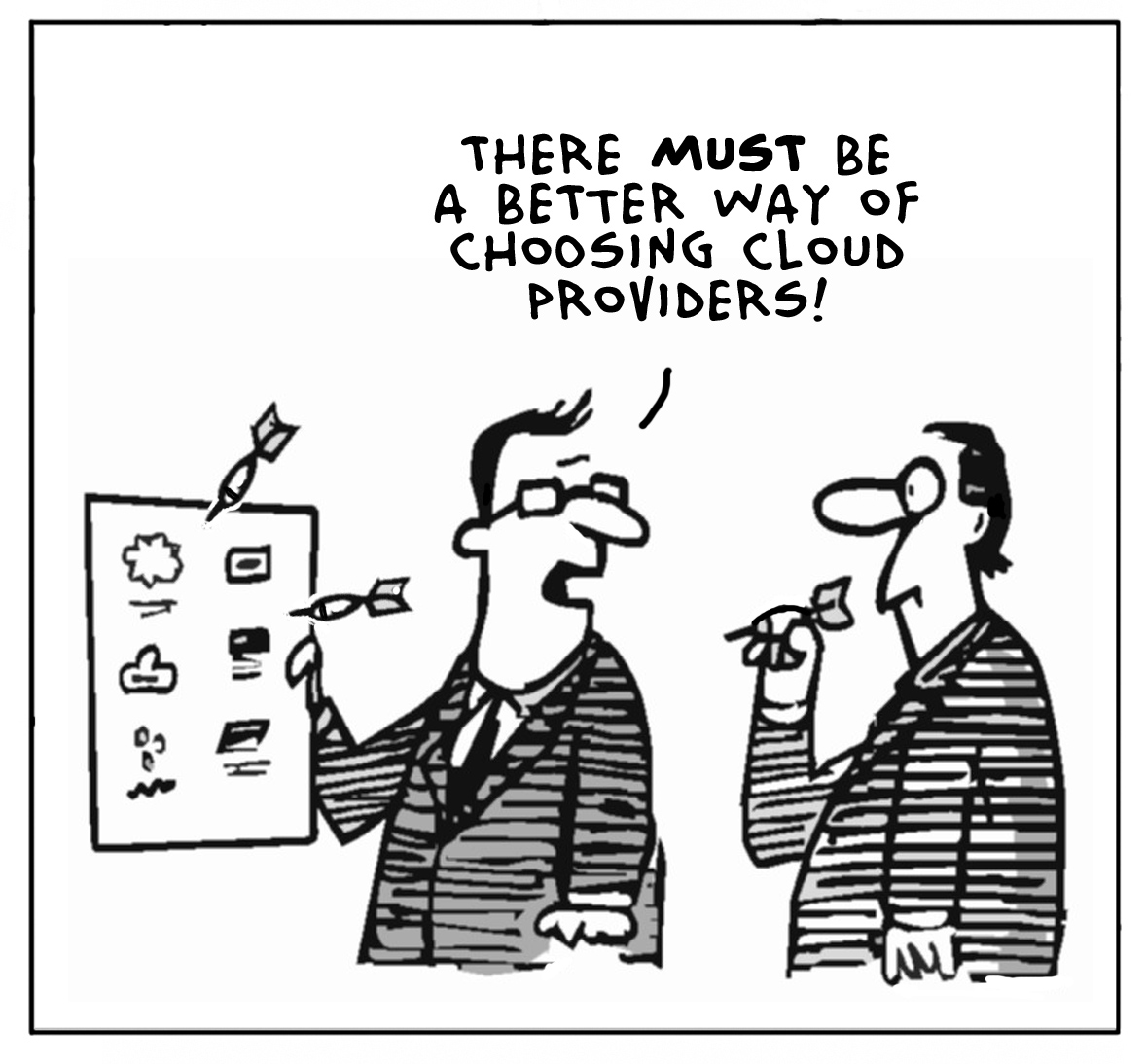
"Tiene que haber una mejor manera de elegir un proveedor de procesamiento en la nube"
Algunas de las tendencias del procesamiento en la nube se aceleraron durante 2013 y más de uno se quedó mirando otra película. Por nombras algunas fuimos testigos de la creciente presión por la interoperabilidad de ambientes super complejos en la nube para que sean construidos sobre estándares abiertos; la evolución de los modelos de provisión de servicios en la nube y la adopción de ambientes en la nube adecuados a distintos sectores de la industria. Al mismo tiempo, estamos empezando a ser testigos de nuevos desarrollos, como el incremento en la demanda de redes dispersas y descentralizadas de ambientes en la nube que ofrecen un mayor control sobre la adecuación a regulaciones, el riego y la gobernabilidad.

  • Cloud Foundry emerge como el estándar de facto de una plataforma-como-servicio (PaaS) de la misma manera que durante 2013 OpenStack lo hizo para una infraestructura-como-servicio (IaaS). Apenas anunciado en septiembre de 2012, para finales del año pasado, OpenStack había emergido como el estándar de facto de una IaaS con más de 1200 contribuciones individuales de código que daban soporte al proyecto.
  • A medida que la oferta de PaaS vaya madurando y más desarrolladores busquen construir y lanzar sus aplicaciones en la nube, se va a intensificar de la misma manera la presión por estándares omnipresentes a nivel plataforma. Gracias al apoyo de líderes de la industria, Cloud Foundry se posiciona como el estándar abierto de facto. Con plataformas PaaS basadas en estándares abiertos, los desarrolladores serán capaces de quitarle el control a los proveedores al mejorar su habilidad para migrar datos y aplicaciones de maneras más fáciles y eficientes.
  • El rol de gerente de sistemas (CIO) va a trasformarse totalmente, cambiando de la tradicional administración del área de TI a la intermediación y provisión de infraestructura, aplicaciones e información en la nube. A medida que la nube se vuelve omnipresente en varias líneas de negocios, TI tiene que asumir la responsabilidad de la integración, niveles de servicio y gobernabilidad de los servicios de la nube.
  • Los ambientes en la nube por sectores de industria están acelerando su adopción en los mercados financieros, de salud, telecomunicaciones, minorista, energía, servicio y muchos más. Hasta hace poco, muchas de las nubes pretendían ser una única herramienta para todos los problemas, con beneficios y características básicas que aplicaban a cualquier empresa independiente de su sector. Pero las organizaciones no son básicas; al contrario, son parte de sectores de la industria con necesidades, desafíos y ventajas únicos.
  • Las implementaciones de nubes híbridas están guiando la adopción de la nube al permitir que las organizaciones integren sus servicios en la nube, tanto públicos como privados, con sus ambientes "legacy".
Y por casa cómo andamos...
  • IBM tuvo una facturación de 4400 millones de dólares de soluciones basadas en la nube durante 2013. Un 69% arriba con respecto al año pasado. Dentro de esa factura 1700 millones de dólares corresponden a servicios.
  • IBM cuenta con más de 40000 expertos en cloud computing con amplios conocimientos de la industria y habilidades para ayudar a sus clientes a transformarse y crecer en la nube; 1560 patentes de invenciones en la nube; y para finales de este año tendrá un total de 40 centros de computo alrededor de mundo bajo el paraguas de SoftLayer.
Hasta hace un par de años hablar de "La Nube" era visto como uno broma por la industria local, hoy el que piensa en la nube tiene los pies bien puestos sobre la tierra.

Saturday, April 5, 2014

Creando el "Estándar" Dorado para el Procesamiento en la Nube


Se acuerdan en los 90' cuándo las empresas construían aplicaciones para todo, desde herramientas de RRHH hasta ERPs para la cadena de abastecimiento. Lo que no teníamos en ese entonces era una manera de juntar todo aquello. Era una rareza que esas aplicaciones pudiesen comunicarse entre ellas sin modificaciones. Las empresas gastaban miles de dólares en aplicaciones y millones integrándolas para que efectivamente proveyeran de algún valor.

Así fue como se perdieron los siguientes 10 años tratando de solucionar este problema. Creando ambientes dónde se pudiese compartir la información fácilmente para liberar los datos críticos que habíamos dejado en silos.

Hoy, sin embargo, asombra la velocidad con la que las empresas se están moviendo hacia la próxima frontera: El Procesamiento en la Nube. Las organizaciones entendieron rápidamente que la nube representa una manera confiable, efectiva en costos y simplemente astuta de proveer valor. Pero la nube es mucho más que una manera de ahorrar costos, las tecnologías de la nube pueden incrementar exponencialmente el rendimiento sin importar la industria. El problema es que muchos están pegando el salto antes de mirar dónde van a aterrizar e invierten en soluciones propietarias de procesamiento en la nube. Bienvenidos a los 90' otra vez.

Esta es la razón por la que empresas como la mía están haciendo tremendas inversiones, no solo en la nube, sino en tecnologías de la nube que están construidas sobre estándares abiertos. Si esperamos que toda la empresa adopte las tecnologías de la nube, deben ser fáciles de usar, ofrecer valor y contar con la capacidad de integrarse, sin importar la plataforma.

Necesitamos ofrecer soluciones que adopten estándares de la industria.

La OpenStack Foundation y Cloud Foundry, OASIS y el Consejo de Clientes para los Estándares en la Nube (Cloud Standards Customer Council) son las organizaciones de estándares aceptadas casi universalmente de hecho. La razón por la que decimos "casi" es que aún hay algunas organizaciones que creen que su manera de hacer las cosas es mejor. Aunque la industria TI como un todo ha acordado trabajar en conjunto para desarrollar un enfoque consensuado, algunas organizaciones siguen creyéndose dueños de la verdad. Esta manera de pensar lleva a que las empresas inviertan fuertemente en ambientes propietarios que las acorralan sin permitirles adaptarse al cambio sin renunciar del todo a ellos.

Para asegurar que las empresas tengan todas las oportunidades de crear ambientes abiertos, muchas organizaciones están haciendo sus mejores esfuerzos para demostrar el poder de una nube abierta. Entre ellas podemos mencionar:

  • OpenStack que recientemente hizo el lanzamiento de su version más significativa, Havana, que ataca dos grandes inhibidores que afectan a quienes adoptan la nube: las preocupaciones sobre la seguridad de sus datos y la confianza en que la seguridad que ya existe en su empresa puede integrarse fácilmente.
  • Cloud Foundry se puede usar para ofrecer aplicaciones para todo el mundo sin la necesidad de ser el administrador de toda la infraestructura y otras cargas administrativas que esto conlleva.
  • Consorcio OpenPOWER recientemente creado como una alianza formada para construir tecnología avanzada para servidores, redes, almacenamiento y aceleradores gráficos.
Estos son ejemplos de la colaboración en la industria, que gracias a un enfoque basado en estándares, hacen que la nube sea más segura y que funcione con la infraestructura de su empresa.

Esto es sólo una punta de lo que los usuarios en la empresas pueden esperar de la nube cuándo la industria se une, invierte y colabora. Imaginen lo que sucederá cuándo todos se suban a esta tendencia basada en estándares abiertos. Aquellos que lo hagan tendrán mucho más que un appliance para resolver su pequeño problema y podrán subirse a un mar de soluciones para potenciar el crecimiento de sus empresas.


Basado en el post de Angel Luis Diaz, PhD, Vicepresidente de Tecnologías Abiertas y Rendimiento en la Nube de IBM.